
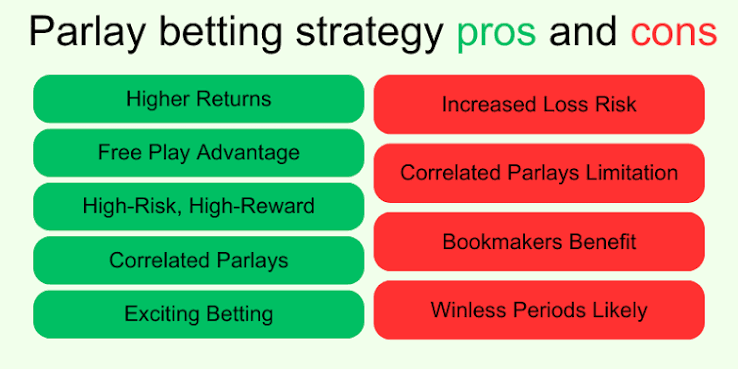
Entering football betting markets requires an objective understanding of how structural match variables compound across different ticket formats. The 2013/2014 French Ligue 1 campaign served as a rigorous learning environment for novices, characterized by distinct tactical polarities ranging from expensively assembled front-runners to deeply entrenched defensive blocks. Novice participants frequently miscalculate the mathematical vulnerability of multi-match accumulators when applied to a league where low goal margins, tactical draws, and single-event disruptions regularly overturn heavily favored outcomes.
Mathematical Probability Mechanics of Single Selections Versus Multi-Fold Parlays
Evaluating a single wager involves isolating the standalone probability of an individual fixture and comparing that calculated likelihood against the price offered by a bookmaker. In a single bet, the participant is exposed to the operational variance of only one ninety-minute event, allowing tactical factors like lineup announcements and home pitch advantage to retain maximum predictive power. The moment selections are combined into an accumulator, each added leg multiplies the theoretical house edge, turning minor statistical uncertainties into substantial risks.
A beginner examining odds movements across an established sports betting service can easily spot how quickly implied hold rates climb on combined tickets. Whenever multiple selections are grouped together on the betting destination provided by ufabet, the compounding margin built into each individual market stacks exponentially, forcing the overall probability of ticket completion down far faster than the multiplied payout multiplier appears to compensate.
Compounding Variance in a Low-Scoring League Environment
French football during the 2013/2014 season was structurally defined by aggressive defensive midfields and compact backlines that suppressed high-volume scoring chances across the mid-table. In a competition where a significant percentage of matches finish 0-0, 1-0, or 1-1, random in-game events—such as a deflected strike, an erroneous offside call, or an early red card—exert an outsized impact on the final result. In high-scoring leagues, an elite favorite can overcome early defensive lapses through superior attacking volume; in Ligue 1, a single defensive lapse often dictated the entire match outcome.
Novice bettors building multi-match tickets during this campaign routinely underestimated how this narrow margin of victory compounded across their selections. A single wager on a heavy favorite like Paris Saint-Germain or AS Monaco carried manageable variance, but linking three or four seemingly safe favorites together across a single matchday multiplied the risk of encountering an unavoidable low-scoring stalemate that invalidated the entire ticket.
Structural Comparison of Ticket Formats Under League Constraints
To properly evaluate which betting structure suits an analytical risk tolerance, beginners must evaluate how single and multi-selection formats behave under the specific tactical conditions of the 2013/2014 Ligue 1 calendar.
The analytical table below illustrates how different betting structures distribute risk, handle operational variance, and expose long-term bankrolls to compounding structural drag.
| Ticket Structure | Exposure Level to Single-Match Variance | House Margin Multiplier Effect | Primary Mathematical Vulnerability | Practical Suitability for Novices |
| Single Match Win/Draw/Win | Isolated to one 90-minute game state | Single bookmaker margin deduction (approx. 4–6%) | Unforeseen match events (early red cards, referee variance) | High; clear cause-and-effect tracking for performance |
| Single Asian Handicap | Minimized via half-win or refund push conditions | Lowest effective margin per traded unit | Severe defensive low-block neutralizing expected margins | Very High; protects capital against narrow one-goal wins |
| Double Accumulator (2 Legs) | Moderate; failure in one fixture voids entire stake | Compounded margin across two independent markets | Correlation bias (assuming two favorites share equal security) | Moderate; acceptable only when genuine price value exists on both |
| Multi-Fold Parlay (4+ Legs) | Catastrophic; single outlier destroys entire ticket | Severe compounding hold rate (often exceeding 20%) | Exponential tail risk in low-scoring, high-draw environments | Extremely Low; functions mathematically as a lottery mechanic |
Understanding the mechanics presented in this structural comparison highlights why professional market operators prioritize single, isolated wagers over elaborate multi-leg tickets. The apparent benefit of high multiplier payouts on parlay tickets consistently masks the fact that the underlying mathematical probability decays at an unsustainable rate for long-term capital preservation.
Mechanisms of Capital Depletion Across Ticket Types
The process of capital depletion operates differently depending on whether an analyst allocates stakes across single positions or combines them into accumulators.
Multi-Leg Tickets → Compounding Bookmaker Edge → High Failure Frequency → Erratic Bankroll Depletion
This structural cycle demonstrates how inexperienced participants exhaust their allocated funds through the deceptive allure of high-multiplier tickets rather than sustained analytical errors.
Capital Preservation and Strategic Stake Sizing Models
Bankroll management is the single most critical factor separating disciplined analysis from rapid insolvency, especially for those entering the betting market for the first time. Allocating flat stakes of 1% to 2% of total capital per single wager creates a mathematical buffer capable of absorbing the statistical drawdowns that occur over a 38-game league season. When bettors switch to accumulators, they often fall into the trap of using dynamic or recovery-oriented stake sizing, hoping a single large parlay payout will recover prior losses.
The psychological discipline required to maintain consistent fractional staking across sports betting finds an exact operational parallel in other probabilistic entertainment sectors. Under the precise operational protocols governing a structured casino online, experienced users must adhere strictly to predefined loss boundaries to avoid rapid balance degradation, a principle that applies identically to football bettors who must resist escalating stake sizes after narrow parlay misses.
The Psychological Pitfalls of Near-Miss Accumulator Tickets
The human brain possesses an innate cognitive bias that treats a multi-leg parlay that failed by one goal as a near success rather than a total loss. In Ligue 1, where a four-leg favorite ticket would routinely see three teams win comfortably while the fourth labored to a scoreless draw against an aggressive low-block team like Lille or Reims, novice bettors often concluded that their predictive methodology was almost perfect. In reality, a failed accumulator is mathematically indistinguishable from a ticket where every selection lost.
This psychological illusion leads to the sunk-cost fallacy, encouraging beginners to construct identical multi-leg tickets week after week under the false impression that their predictive accuracy is trending upward. Bookmakers capitalize heavily on this cognitive defect by offering cash-out options and promotional odds boosts on accumulators, both of which mathematically extract further value from the bettor while sustaining the illusion of control.
Identifying Failure Conditions in Favorite-Heavy Parlays
Even seemingly mathematically sound accumulator tickets face specific operational failure conditions that systematically dismantle their expected return during a domestic league campaign.
- Midweek Continental Exhaustion: Teams competing in the UEFA Champions League or Europa League experience notable physical and tactical regression in subsequent domestic fixtures.
- Asymmetric Incentive Structures: Late-season relegation-threatened clubs fight with a tactical intensity that heavily disrupts mid-table teams that have already secured safety and lack competitive urgency.
- Adverse Tactical Pairings: Combining teams that rely exclusively on counter-attacking into accumulators against deep-sitting opponents regularly results in unexpected possession-heavy stalemates.
Failing to account for these specific contextual traps turns multi-match accumulators into volatile liabilities, as the failure of just one unmotivated or fatigued favorite invalidates the analytical effort invested across all other selections on the ticket.
Summary
The 2013/2014 Ligue 1 season demonstrated that navigating football betting markets requires an objective appraisal of risk mechanics, particularly when comparing single wagers to multi-fold accumulators. While parlays offer the emotional appeal of high potential payouts from small initial stakes, their compounding house margins and extreme vulnerability to low-scoring league variance make them inherently inefficient for capital preservation. For beginners, focusing on disciplined, single-event allocations provides the clearest path to understanding market pricing, controlling variance, and building sustainable analytical proficiency.
